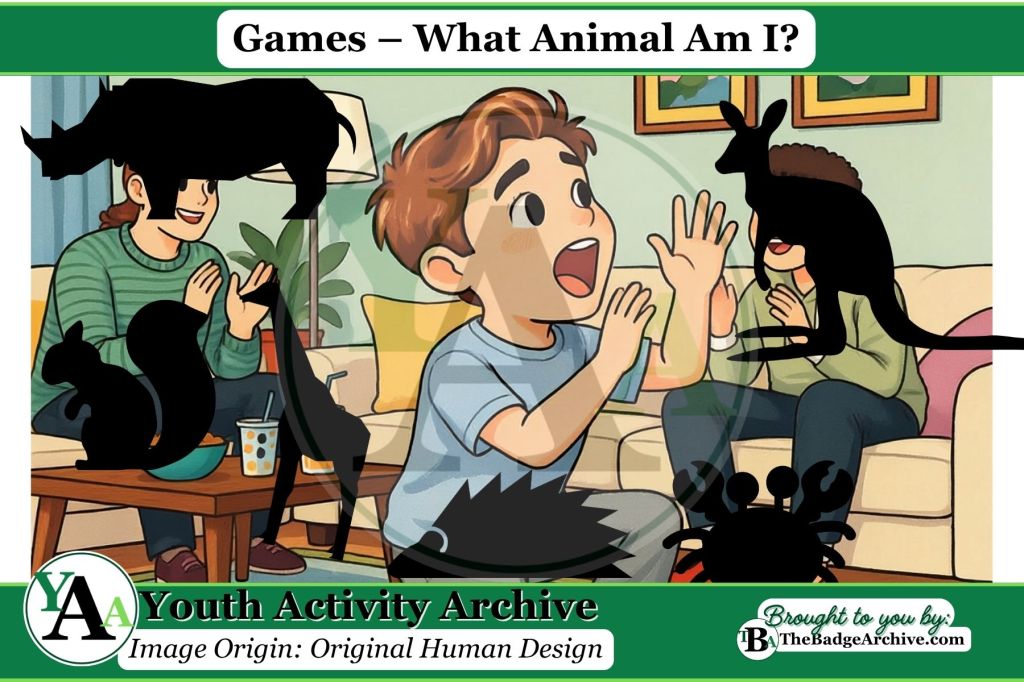
Activity Description: Charades-style game to help youth learn how animals use sounds and movements to communicate needs and feelings.
Items Needed:
- Scenario Cards depicting animal communication
- Bowl, hat, or bag
- (Optional) Timer
- (Optional) Small rewards for correct guesses
Before the Meeting Starts:
- Create Scenario Cards. (5 min)
- Cards should feature specific animals and what they are trying to communicate. Include scenarios like a dog playing fetch, birds sharing food locations, or a guide dog assisting a person.
Instructions (Estimated Total Time: 25 min):
- Introduce activity. (5 min)
- Youth take turns acting out a card using only animal noises and gestures.
- Remind them to focus on the specific message the animal is sending.
- Have youth take turns drawing a Scenario Card. (1–2 min)
- Each act out the prompt without speaking or using props. (5–7 min)
- The group tries to guess the prompt. Encourage the observers to guess both the animal and what it is “saying” through its actions.
- Once the prompt is correctly guessed, the next youth takes their turn.
- Continue until all youth have performed or the prompts run out. (5 min)
- Review information learned. (5 min)
- Discuss the different types of communication observed during the game.
- Ask how they were able to understand the animal’s needs without using human words.
- Remind them that animals communicate just like humans do. We aren’t very different. We all need care and communication.
Possible Scenario Cards for Kindergarteners
Common animal sounds and the meanings behind different animal behaviors.
- Dog wagging its tail and barking to play fetch.
- Cat purring and rubbing against legs to ask for pets.
- Rabbit thumping its foot to warn others of danger.
- Bird singing a song to tell others where to find food.
- Bee doing a dance to show friends where flowers are.
- Snake hissing loudly to tell others to stay away.
- Lion roaring to show everyone who is in charge.
- Wolf howling to call its pack together.
- Elephant trumpeting to say hello to its family.
- Monkey screeching to warn others that a predator is near.
- Duck quacking to make sure its ducklings stay close.
- Bear growling to protect its cubs from a stranger.
- Gorilla beating its chest to show how strong it is.
- Dolphin making clicking sounds to talk to its friends.
- Horse neighing because it is ready to eat some hay.
- Pig oinking and nudging its bowl for a snack.
- Rooster crowing to tell the farm that it is morning.
- Frog croaking by the water to find a mate or friend.
- Penguin chirping to find its family in a large group.
- Squirrel chattering to tell others to stay away from its acorns.
- Cow mooing loudly to find its lost calf.
- Sheep bleating to make sure it stays with the flock.
- Owl hooting in the tree to claim its territory at night.
- Kangaroo thumping its tail to show it is nervous or scared.
Possible Scenario Cards for Elementary Students
Advanced challenges to act out complex animal behaviors and social signals used for survival.
- Honeybee doing a “waggle dance” to give directions to a specific flower patch.
- Meerkat standing on hind legs and chirping a “sentry” warning about a hawk in the sky.
- Humpback whale singing a complex song to communicate with others across the ocean.
- Beaver slapping its tail on the water to alert the rest of the colony to an intruder.
- Ant leaving a pheromone trail on the ground to guide the colony to a large food source.
- Chimpanzee using hand gestures and facial expressions to ask a friend for a grooming session.
- Prairie dog making a unique “yip” that describes the size and color of an approaching predator.
- Firefly blinking a specific light pattern to find a partner in the dark.
- Skunk stomping its front feet and lifting its tail as a final warning before spraying.
- Hyena “laughing” to signal frustration or to tell the pack that food has been found.
- Sea lion barking loudly to defend its specific resting spot on a crowded dock.
- Alligator making a low-frequency “bellow” that makes the water dance to find a mate.
- Peacock spreading its tail feathers and rattling them to impress others.
- Bat using echolocation clicks to “see” and share the location of flying insects.
- Lemur marking a tree with its scent to tell other groups that this is their home.
- Octopus changing its skin color and texture to show it is angry or needs to hide.
- Giraffe pressing its neck against another to show who is the leader of the group.
- Raven making a specific “caw” to invite others to a food source it discovered.
- Pufferfish inflating its body into a spikey ball to tell predators it is too big to eat.
- Baboon flashing its bright eyelids or yawning to show a threat to its rivals.
- Cheetah chirping like a bird to call its cubs hidden in the tall grass.
- Zebra using ear positions to show if they are feeling aggressive or friendly.
- Wolf rubbing against a tree to leave a scent for other packs to stay away.
- Elephant rumbing at a very low pitch to send a message through the ground to far-away family.
Possible Scenario Cards for Teens
Introduce basic understanding of social hierarchies in nature and how animals use non-verbal cues to communicate boundaries or needs.
- Wolf baring teeth and growling to protect its rank in the pack.
- Cat arching its back and hissing to look larger to a threat.
- Dog bowing with front legs down to signal that it wants to play.
- Peacock spreading its tail feathers and shaking them to attract a mate.
- Squirrel flicking its tail and barking to warn others about a nearby predator.
- Horse pinning its ears flat back to show it is angry or about to bite.
- Gorilla beating its chest and making loud hoots to show dominance.
- Bee doing a “figure eight” dance to tell the hive where to find flowers.
- Rattlesnake shaking its tail to warn a hiker to stay away.
- Lion rubbing its head against another member of the pride to bond.
- Rooster flapping its wings and crowing to claim its territory.
- White-tailed deer flagging its tail to tell the herd to run from danger.
- Dolphin pod making clicking sounds to coordinate a hunt together.
- Bear standing on its hind legs to get a better view of a stranger.
- Rabbit thumping its back foot on the ground to alert others to a threat.
- Emperor penguin huddling in a group and vocalizing to find its family.
- Fiddler crab waving one large claw to defend its spot on the beach.
- Great horned owl puffing out its feathers to look scary to an intruder.
- Chimpanzee using a “play face” with an open mouth to show social intent.
- Skunk stomping its front feet as a final warning before using its scent.
- Elephant flapping its ears and rumbling to signal excitement to the herd.
- Coyote group yipping and howling to share their location with the pack.
- Swan arching its wings and hissing to protect its nesting area.
- Baboon yawning and showing its teeth as a threat to a rival.
–
For More Fun Ideas and Plans

Join the Girl Scout Daisy, Brownie, and Junior Leader Help Facebook Group
(Not an official GSUSA Group)

Join the Girl Scout Cadette, Senior, and Ambassador Leader Help Facebook Group
(Not an official GSUSA Group)

See other Recommended Facebook Groups for some Scouting Organizations
(No official Groups)
–
Click Here -> To see information References:
Disclaimer: The information published on Youth Activity Archive and The Badge Archive is built from the references listed below. These sources demonstrate that our content is grounded in facts and research, not opinion or speculation. Readers may consult them directly when looking for additional material.
- Takahama, Valerie, et al. How to Guide Girl Scout Daisies through 5 Flowers, 4 Stories, 3 Cheers for Animals. Girl Scouts of the U.S.A., 2010. pp. 64–65.
- Find out how you can support The Badge Archive!
- Choose a different Connect Animal Care to Self Care activity.
- Return to the Fun Games Categories.
- See other Charade activities.