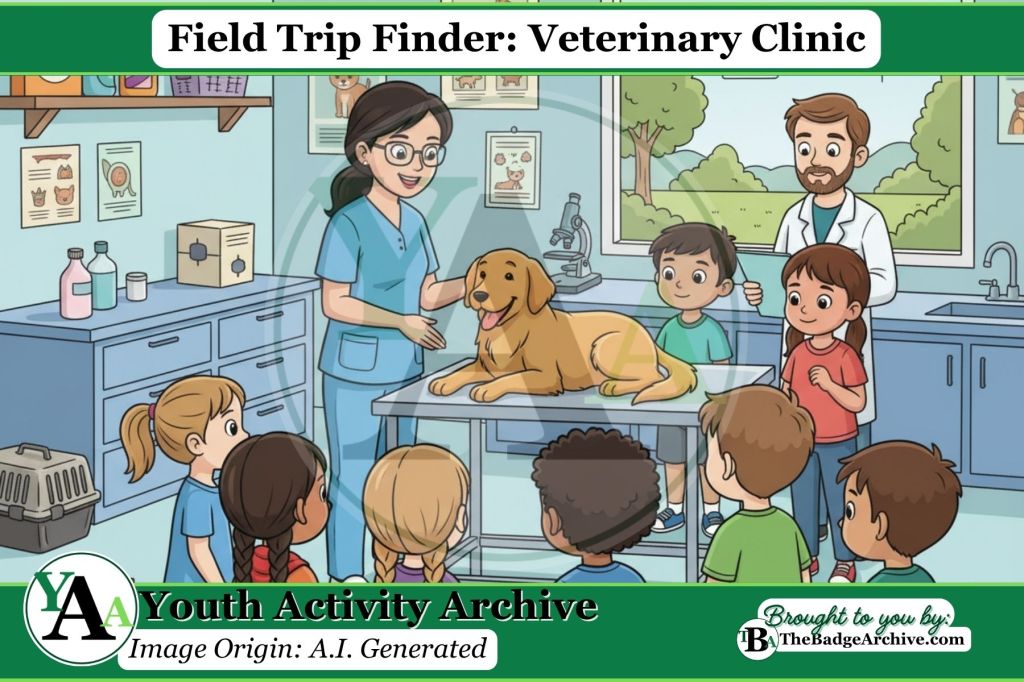
Activity Description: Information on how to find an appropriate location for a Veterinary Clinic visit or tour with a youth group.
Contact Timing:
Veterinary clinics operate year-round, but schedule density fluctuates. Avoid reaching out during major holiday weeks (Thanksgiving, Christmas, Spring Break) as boarding and emergency cases spike. Avoid Monday mornings and Friday afternoons, which are the highest-volume times for surgeries and discharges.
Late winter or early fall is ideal for scheduling. Aim for mid-week contact (Tuesday through Thursday) between 10:00 AM and 2:00 PM, when the morning surgery rush has subsided and the after-school/after-work appointments have not yet begun.
Resources:
- American Animal Hospital Association (AAHA) Accredited Hospital Locator: AAHA accreditation is voluntary and signifies a clinic meets rigorous quality standards. These facilities are often better equipped for structured visits. Search the AAHA Hospital Locator and filter by zip code.
- State Veterinary Medical Associations (SVMA): Every state has a professional association for veterinarians. Search “[Desired State] Veterinary Medical Association.” Many SVMAs have “Public Resources” or “Education” committees that can offer clinics interested in community outreach.
Other Resources:
- AVMA Member Directory / State Licensing Boards: Use the American Veterinary Medical Association (AVMA) or the state’s professional licensing board to verify that a clinic’s license is active and in good standing. Search “[Desired State] Board of Veterinary Medical Examiners.”
- Veterinary Technician Programs: Colleges with AVMA-accredited Veterinary Technology programs often have “teaching clinics.” These are highly receptive to educational groups. Search “[State/City] Accredited Veterinary Technician Program.”
- Municipal Animal Shelters: Many large shelters have on-site veterinary clinics and dedicated “Volunteer Coordinators” or “Education Officers” who handle youth group tours more formally than private practices. See Field Trip Finder: Animal Shelters for more information on finding Animal Shelters.
Targeted Search Terms:
- Use City, County, or State first, then delete to widen the search if nothing appears.
- Use “Veterinary Clinic,” “Animal Hospital,” or simply “Veterinary.”
- Try searching “[Scout/School Organization] Veterinary Clinic [Field Trip/Badge/Tour]”.
- Other Key words: “Educational Veterinary Clinic Tour”, “Veterinary Youth Outreach”, “Veterinary Science career day,” “Veterinary student observation,” “Behind the scenes animal hospital tour,” “Public education veterinary.”
Verification and Contact Protocol
Once you identify a location, ensure it meets standards.
- “What is your maximum group size for the ‘back-of-house’ areas (pharmacy, lab, x-ray), and what is the minimum age requirement for youth to enter the treatment area?”
- “Do you have a protocol for youth groups that ensures we do not interfere with active medical cases or violate client confidentiality (HIPAA-style privacy for pet owners)?”
- “Can you demonstrate specific skills relevant to our goals, such as reading an X-ray, explaining a microscope slide, or showing how to perform a basic physical exam?”
- “Does your facility’s insurance cover supervised youth tours, and do you provide necessary Personal Protective Equipment (PPE) like gloves or masks if we enter the surgical prep area?”
Inquiry Letter
When making first contact, provide specific info to ensure the request received correctly.
Subject: Inquiry: Educational Tour Request for [Organization Name] – [Date Range]
“I am contacting you on behalf of [Youth Organization] to request information regarding an educational tour or humane education presentation.
- Group Size: [Number] youth and [Number] adults.
- Age Range: [Ages, e.g., 10–12 years old].
- Objective: [e.g., Completing requirements for a Badge / Learning about animal welfare careers].
- Availability: We are looking for a mid-week visit during the month of [Month].
Please provide your current group visit policies, liability waiver requirements, and any associated fees.”
–
For More Fun Ideas and Plans

Join the Girl Scout Daisy, Brownie, and Junior Leader Help Facebook Group
(Not an official GSUSA Group)

Join the Girl Scout Cadette, Senior, and Ambassador Leader Help Facebook Group
(Not an official GSUSA Group)

See other Recommended Facebook Groups for some Scouting Organizations
(No official Groups)
–
Click Here -> To see information References:
Disclaimer: The information published on Youth Activity Archive and The Badge Archive is built from the references listed below. These sources demonstrate that our content is grounded in facts and research, not opinion or speculation. Readers may consult them directly when looking for additional material.
- Girl Scouts of the U.S.A. “Meeting : 5 Flowers, 4 Stories, 3 Cheers for Animals! Pt. 3.” My.girlscouts.org, Girl Scouts of the U.S.A., https://my.girlscouts.org/content/girlscouts-vtk/en/vtk.html. Accessed 23 Jan. 2026.
- Takahama, Valerie, et al. How to Guide Girl Scout Daisies through 5 Flowers, 4 Stories, 3 Cheers for Animals. Girl Scouts of the U.S.A., 2010. p. 56.
- Find out how you can support The Badge Archive!
- Choose a different Early Caring for Animals activity.