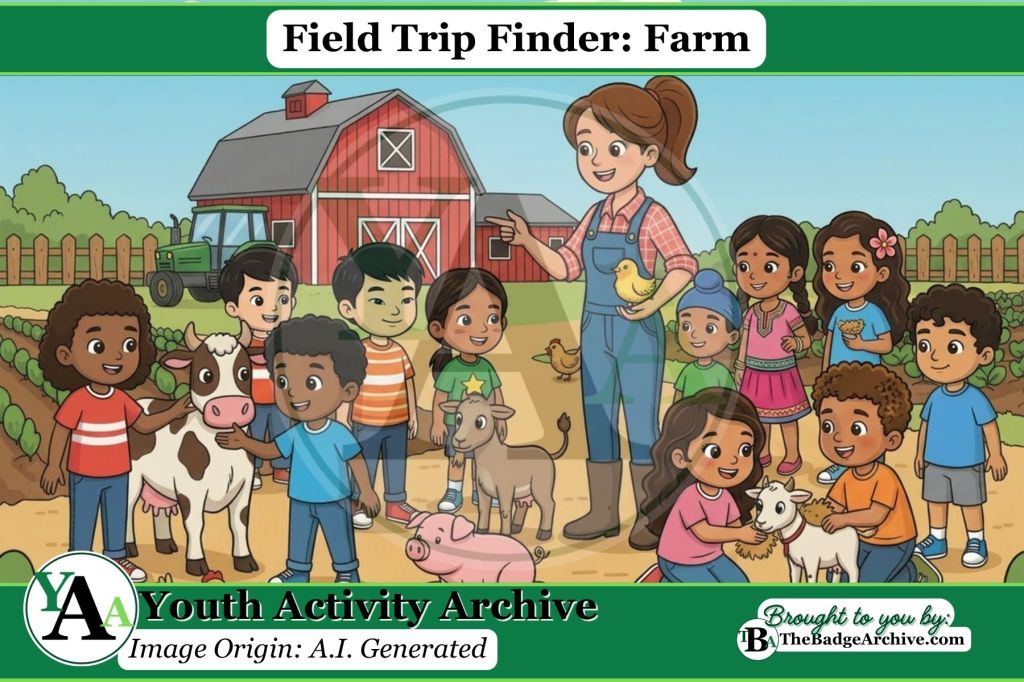
Activity Description: Information on how to find an appropriate location for a farm visit or tour with a youth group.
Contact Timing:
Farms are governed by seasons. Contact them in the late winter for a spring visit, or late summer for a fall visit. Avoid calling during peak harvest or planting weeks.
To find a local farm, target facilities that are already set up for public interaction or educational outreach. Use the following specialized resources and search strategies to identify the right partner.
Resources:
- Cooperative Extension Offices: Every county in the U.S. has a university-linked extension office. Search “[Desired County] Cooperative Extension.” These agents are the primary link between the agricultural community and the public. They can provide a list of local farmers who are open to hosting educational tours.
- USDA Local Food Directories: Use the USDA On-Farm Market Directory to find farms that sell directly to the public. These locations are accustomed to visitors and often have the infrastructure (parking, restrooms) to host a group.
- Agritourism Directories: Search sites like FarmStayUS or LocalHarvest. If possible, filter for “Educational Tours” or “Farm Visits.”
Other Possible Resources:
- State Department of Agriculture: Most states maintain an “Agritourism” or “Farm Fresh” map. Search “[State] Department of Agriculture Agritourism Map”.
- The Farm Bureau: Contact the local County or State Farm Bureau. Search “[Desired County/State] Farm Bureau.” These are member-led organizations that advocate for agriculture and sometimes have “Agriculture in the Classroom” coordinators who can facilitate visits or tours.
- American Dairy Association (ADA): If looking for a dairy farm specifically, visit the regional ADA website Search “[County/State] American Dairy Association”. They might have a list of “Open Farm” days or educational partner farms.
Targeted Search Terms:
- Use City, County, or State first, then delete to widen the search if nothing appears.
- Try searching “[Scout/School Organization] Farm [Field Trip/Badge/Tour]”.
- Other Key words: “Educational Farm”, “Demonstration Farm”, “Historic Farm”.
- CSAs are smaller, community-focused farms that are often more flexible for small group visits than large-scale industrial operations. Search “[City/County] CSAs (Community Supported Agriculture)”
Verification and Contact Protocol
Once you identify a farm, ensure it meets standards.
- Ask if they are a “working farm” or a “hobby farm.” Working farms are better for learning about Animal Science or Farming, while hobby/petting farms are better for younger youth “Go See It” adventures.
- Confirm they have “Agritourism Liability” coverage or are familiar with state-specific agritourism laws, which provide legal protections for both the farmer and the visitors.
Inquiry Letter
When making first contact, provide specific info to ensure the request received correctly.
Subject: Inquiry: Educational Tour Request for [Organization Name] – [Date Range]
“I am contacting you on behalf of [Youth Organization] to request information regarding an educational tour or humane education presentation.
- Group Size: [Number] youth and [Number] adults.
- Age Range: [Ages, e.g., 10–12 years old].
- Objective: [e.g., Completing requirements for a Badge / Learning about animal welfare careers].
- Availability: We are looking for a mid-week visit during the month of [Month].
Please provide your current group visit policies, liability waiver requirements, and any associated fees.”
–
For More Fun Ideas and Plans

Join the Girl Scout Daisy, Brownie, and Junior Leader Help Facebook Group
(Not an official GSUSA Group)

Join the Girl Scout Cadette, Senior, and Ambassador Leader Help Facebook Group
(Not an official GSUSA Group)

See other Recommended Facebook Groups for some Scouting Organizations
(No official Groups)
–
Click Here -> To see information References:
Disclaimer: The information published on Youth Activity Archive and The Badge Archive is built from the references listed below. These sources demonstrate that our content is grounded in facts and research, not opinion or speculation. Readers may consult them directly when looking for additional material.
- Girl Scouts of the U.S.A. “Meeting : 5 Flowers, 4 Stories, 3 Cheers for Animals! Pt. 3.” My.girlscouts.org, Girl Scouts of the U.S.A., https://my.girlscouts.org/content/girlscouts-vtk/en/vtk.html. Accessed 23 Jan. 2026.
- Takahama, Valerie, et al. How to Guide Girl Scout Daisies through 5 Flowers, 4 Stories, 3 Cheers for Animals. Girl Scouts of the U.S.A., 2010. p. 56.
- Find out how you can support The Badge Archive!
- Choose a different Early Caring for Animals activity.