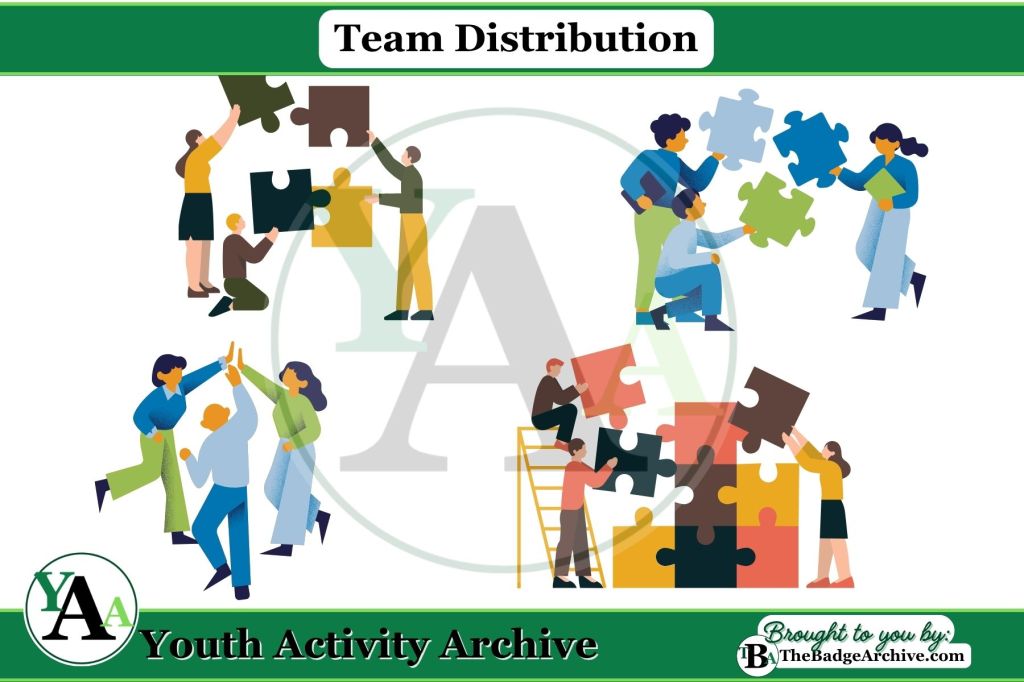
There are two main methods to distribute teams. One allows equal team distribution and the other results in random team sizes:
Methods for Equal Distribution of Teams
These methods help leaders choose teams that are equal in size, but help randomize who is on what team.
- Card Matching: Give each Youth a card (e.g., peanut butter and jelly), and let them find their match. Group sizes depend on the matches found.
- Color-Coded Cards or Tokens: Prepare a bag with an equal number of different colors or tokens. Youths draw one and group by color.
- Comic Strip Match Up: Have a container filled with comic strip frames (each sequence should have enough frames for the desired number of scouts for each group). Youths takes a turn selecting one comic frame from the container and search for other scouts who have frames from the same comic strip sequence. They arrange the frames in the correct sequence to complete the comic strip before they can sit down, as a newly formed group.
- Counting Off: Have Youths count off (e.g., “1, 2, 3, 4”) and divide them into groups based on their assigned number.
- Find their Match: Provide each Youth with a prompt or card tied to a specific theme or group. Use themes like animals, hobbies, or traits to align groups (could even be superheroes, sports teams, historical figures, etc.) Youths must find and group with others who share similar cards/prompts.
- Leader-Assigned Groups: Create diverse teams yourself by balancing skills, personalities, or other factors.
- Matching Traits or Interests: Pre-determine groups based on shared interests or traits (e.g., favorite activities or birth months).
- Puzzle Pieces: Cut images or shapes into equal pieces and distribute them. Youths form groups by assembling their puzzle.
- Set Team Captains: Choose team captains and have them alternate picking members until groups are filled.
- Wearable Item Match: Give each Youth a wearable item upon arrival (e.g., bracelet, bandana, lanyard, headband). During team formation, call out which items should group together—such as matching colors, themes (e.g., red vs. blue), or categories (e.g., cat/dog/fish). Scouts form teams based on the item they received.
Methods for Random Team Sizes
These methods help leaders choose teams that require more randomness, like uneven team sizes.
- Dice Roll: Scouts roll a die, and their number determines their group (e.g., all “1s” together).
- Group by Physical Characteristics: Sort by something visible (e.g., shirt colors) to evenly balance groups.
- Human Sorting Line: Ask Youths to line up by height, birthday month, etc., then divide from one end of the line. Groups may end up uneven.
- Random Themes: Assign groups based on something fun or unrelated (e.g., their favorite fruit), but without ensuring equal distribution.
- Stickers or Labels: Hand out random stickers or labels, and group Youths by similar ones. Uneven counts may occur.
–
For More Fun Ideas and Plans

Join the Girl Scout Daisy, Brownie, and Junior Leader Help Facebook Group
(Not an official GSUSA Group)

Join the Girl Scout Cadette, Senior, and Ambassador Leader Help Facebook Group
(Not an official GSUSA Group)

See other Recommended Facebook Groups for some Scouting Organizations
(No official Groups)
–
Click Here -> To see information References:
Disclaimer: The information published on Youth Activity Archive and The Badge Archive is built from the references listed below. These sources demonstrate that our content is grounded in facts and research, not opinion or speculation. Readers may consult them directly when looking for additional material.
- “Girl Scout Games.” Girl Scouts of Montana and Wyoming, http://www.gsmw.org/content/dam/gsmw-redesign/documents/Girl%20Scout%20Games.pdf. Accessed 22 Feb. 2025.
- Find out how you can support The Badge Archive!
- Return to the Fun Games Categories.